
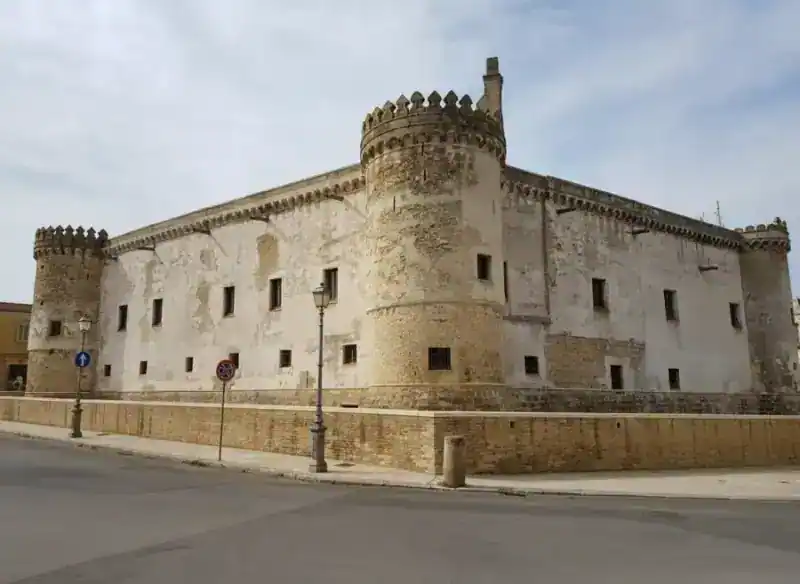
In the heart of Torremaggiore, a town often overlooked in favor of coastal destinations, the Ducal Castle rises as a testament to centuries of noble power and architectural ambition. This fortified residence blends medieval strength with Renaissance elegance, offering visitors a rare glimpse into the feudal world that shaped this corner of the Province of Foggia. The stone walls whisper stories of lords and ladies, of strategic alliances and local governance that defined entire eras.
Walls That Remember
The castle's architecture tells a layered story. What began as a defensive stronghold evolved over centuries into a noble residence, each generation leaving its mark in stone and design. The thick medieval walls meet the refined windows of the Renaissance, creating a dialogue between security and beauty that defines the building's character.
As you move through the historic chambers, the transition from fortress to palazzo becomes clear. Vaulted ceilings give way to decorated rooms, and narrow defensive passages open into spaces designed for courtly life. It's a physical timeline of how power expressed itself across different ages.
Echoes of Noble Life
The rooms once occupied by local nobility reveal the daily rhythms of feudal existence. These weren't just administrative spaces but homes where families lived, entertained, and made decisions that rippled through the surrounding countryside. The layout of the chambers reflects the social hierarchies and domestic routines of centuries past.
Look for the architectural details that distinguished noble residences: the placement of fireplaces, the decorative elements that survived, the way light enters certain rooms. Each detail offers a window into the aesthetic values and practical concerns of the castle's historic inhabitants.
Beyond the Castle Walls
Torremaggiore itself rewards exploration. The town grew around the castle, and its streets still follow medieval patterns. After your visit, wander the historic center to see how the castle influenced the urban fabric around it. The relationship between fortress and town is part of the larger story of settlement in northern Puglia.
The surrounding Province of Foggia offers contrasts worth experiencing: the vast plains of the Tavoliere, the coastal areas along the Adriatic, and other historic centers like Lucera with its own impressive fortifications. The castle becomes richer when understood as part of this regional tapestry of medieval power and culture.
What to Notice During Your Visit
- Architectural layers where medieval defensive features meet Renaissance refinement
- The view from upper levels over Torremaggiore and the surrounding countryside
- Original structural elements that reveal construction techniques from different periods
- The spatial arrangement of rooms that reflects noble hierarchy and domestic life
- Details in stonework and surviving decorative elements that speak to craftsmanship of the era
The Ducal Castle rewards visitors who take their time. This isn't a quick photo stop but a place to slow down and let the weight of history settle. In a region often defined by its coastline and agriculture, these fortified stones offer a different kind of beauty—one built on power, continuity, and the human impulse to leave a mark that outlasts a single lifetime.