
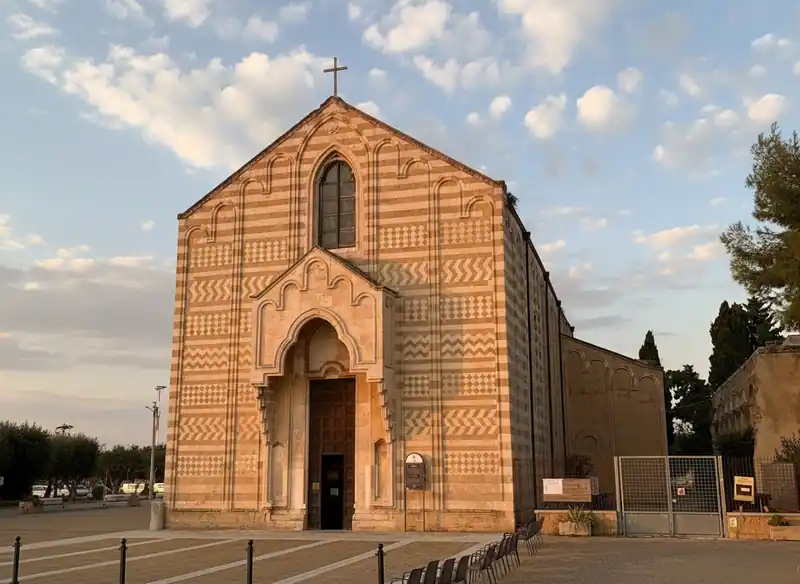
Just beyond the bustling port of Brindisi, the Chiesa di Santa Maria del Casale stands like a medieval jewel waiting to be discovered. This Romanesque masterpiece, built in the early 14th century, surprises visitors with its distinctive two-tone façade of honey-colored stone and grey carparo, arranged in mesmerizing geometric patterns that dance across the exterior walls. The church sits in the quiet countryside of Contrada Baroncino, offering a peaceful retreat from the modern city and a journey back to an era when Crusaders departed from nearby shores.
A Façade That Tells Stories in Stone
The exterior of Santa Maria del Casale is unlike any other church in Puglia. The intricate geometric motifs in marble and local stone create an almost hypnotic effect, blending Romanesque solidity with Eastern decorative influences brought back by medieval traders and pilgrims. Look closely and you'll spot diamond patterns, arches, and rosettes that seem to shift in the Mediterranean light.
The portal, framed by elegant columns and a delicate arch, invites you into a space where time seems to stand still. This was once a stopping point for knights and travelers heading to the Holy Land, and that sense of departure and devotion still lingers in the stones.
Step Inside: Frescoes and Medieval Light
Crossing the threshold, the serene interior opens up with a simple nave bathed in soft, filtered light. The real treasures here are the 14th-century frescoes that cover portions of the walls and apse. These vibrant scenes depicting the Last Judgment, the Crucifixion, and saints in vivid blues, reds, and golds offer a rare glimpse into the religious artistry of medieval Puglia.
The frescoes were rediscovered in the 20th century beneath layers of whitewash, and their restoration has revealed details of astonishing clarity. Stand quietly and let your eyes adjust; the paintings seem to glow from within, each figure telling a story of faith, fear, and hope.
Why This Church Matters Beyond Brindisi
Santa Maria del Casale is not just an architectural curiosity it's a living link to Brindisi's role as a gateway between East and West. The church served as a hospice for pilgrims and a place of prayer before long sea voyages. Today, it offers visitors a chance to step off the beaten path and experience Puglia's medieval heritage without the crowds that gather at more famous sites.
Families, history enthusiasts, and anyone seeking a moment of tranquility will find this church deeply rewarding. The absence of gift shops and tour buses only adds to the authenticity of the experience.
What to Notice During Your Visit
- The play of light on the façade visit in the late afternoon when the golden hour brings out the warm tones of the stone
- The intricate carved capitals atop the columns, each one unique
- The Giudizio Universale fresco in the apse, a masterpiece of medieval narrative painting
- The peaceful silence inside, broken only by the occasional song of birds outside
- The view from the small piazza in front, which offers a perfect vantage point for photographing the entire façade
Combine Your Visit with Nearby Brindisi
After exploring the church, head back into the historic center of Brindisi to see the Roman columns marking the end of the ancient Via Appia, or stroll along the waterfront where ferries still depart for Greece. The nearby Castello Svevo and the Museo Archeologico Provinciale add depth to your understanding of this ancient port city's layered history. For a meal, seek out a trattoria serving riso patate e cozze, the local rice and mussel dish that captures the flavors of the Adriatic coast.