
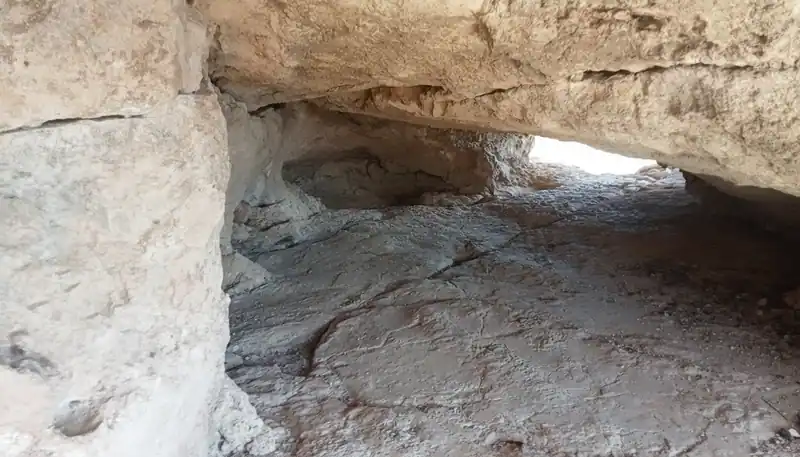
Beneath the sunbaked hills of Laterza, a hidden world waits in cool darkness. Caverna Pozzitiello invites you to descend into a realm where time is measured in millennia and written in stone.
A Journey Through Stone and Time
The cave system unfolds like chapters in an ancient book, each chamber revealing layers of geological drama. Limestone formations twist and hang from ceilings, sculpted drop by drop over thousands of years.
Walking through the passages, the temperature drops and the air carries the mineral scent of deep earth. Stalactites and stalagmites create natural sculptures that no human hand could replicate, evidence of water's patient artistry.
- Natural chambers of varying sizes, each with distinct formations
- Limestone features that showcase erosion and mineral deposition
- Cool, stable underground temperatures even in summer heat
- Geological cross-sections visible in chamber walls
- Quiet acoustics that amplify the sense of depth
The Hidden Character of Laterza
Laterza itself sits on the edge of the gravina, a dramatic ravine that defines this corner of the Province of Taranto. The town has long been shaped by its relationship with stone—quarried, carved, and explored.
Caverna Pozzitiello is part of this geological legacy. The cave system formed as water carved channels through the soft tufa and limestone bedrock, creating a subterranean maze that speaks to the region's hydrological history.
What Makes This Cave Different
Unlike coastal grottoes battered by waves or show caves lit with artificial drama, Caverna Pozzitiello retains a raw, unvarnished quality. It feels like a genuine discovery rather than a tourist stage set.
The formations here are delicate and intricate, with some chambers featuring curtain-like draperies of calcite that glow faintly when light passes through. Others reveal columnar structures where stalactites and stalagmites have met and fused over eons.
Visiting Tips and Nearby Highlights
Bring a light jacket—the underground temperature stays steady year-round, significantly cooler than the surface in summer. Wear sturdy shoes with good grip; cave floors can be uneven and occasionally damp.
Photography enthusiasts should note that natural light is limited; bring a good flashlight or headlamp to appreciate the finer details of the formations. Early morning or late afternoon visits often offer the best conditions for entering the cave system.
- Combine your visit with a walk along the gravina rim for sweeping views
- Explore Laterza's historic center and its ceramics tradition
- Visit nearby Castellaneta, birthplace of Rudolph Valentino, just 15 km away
- Sample local bread baked in traditional wood-fired ovens
The cave system is best appreciated in spring and autumn when temperatures above ground are mild and the contrast with the cool underground is less jarring. Summer visitors will find it a welcome refuge from the heat, while winter explorers can enjoy the cave's constant, moderate climate.