
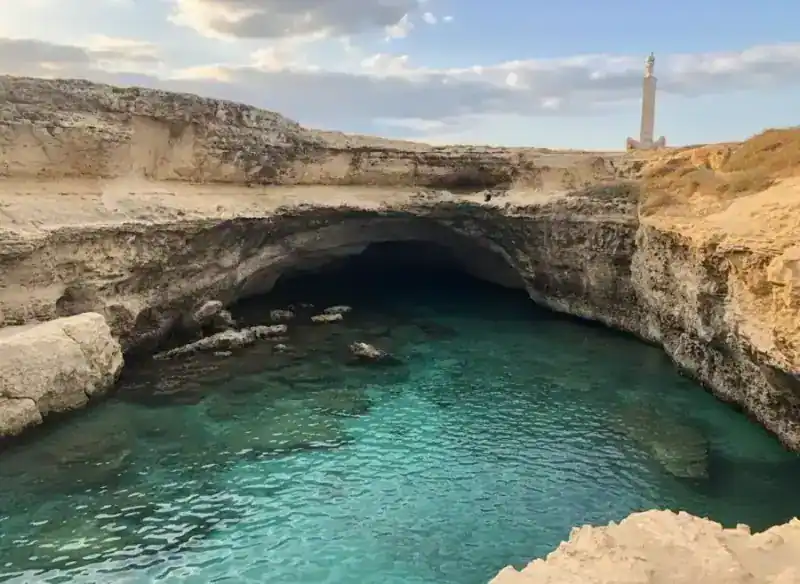
Tucked along the rugged Adriatic coastline near the ancient settlement of Roca, the Grotta della Poesia ranks among Puglia's most mesmerizing natural swimming spots. This coastal cave isn't just a geological wonder it's a place where myth, history, and raw Mediterranean beauty converge in a single turquoise pool. Legend says a princess once bathed here, her beauty so captivating that poets traveled from distant lands just to compose verses in her honor.
Where Freshwater Springs Meet the Adriatic
What makes the Cave of Poetry truly exceptional is its natural freshwater pool, fed by underground springs that bubble up through the limestone floor. The water here is colder and clearer than the surrounding sea, creating a startling contrast when you first slip in. On hot summer days, locals and adventurous travelers alike gather on the smooth rock edges, sunbathing between dips.
The cave itself is semi-open to the sky, with sheer walls rising fifteen meters above the water. Sunlight filters through at different angles throughout the day, turning the pool from deep emerald in the morning to electric turquoise by noon. The sensation of swimming here feels almost ceremonial, as if you've stumbled into a sacred place forgotten by time.
Ancient Echoes Along the Coast
Just steps away from the cave, the archaeological site of Roca Vecchia whispers stories of Messapian settlements and Bronze Age fortifications. Walking along the coastal path, you'll spot fragments of ancient walls emerging from the scrubland, remnants of a civilization that chose this strategic promontory millennia ago. The proximity of history and nature here is visceral you can literally swim in the morning and explore ruins in the afternoon.
The entire stretch of coastline between Torre dell'Orso and San Foca is a protected area, which means development is minimal and the landscape retains its wild character. Bring good walking shoes if you plan to explore beyond the main cave; the rock formations and hidden coves along this stretch reward the curious.
Planning Your Dive Into Poetry
Timing matters here more than at typical beaches. Arrive early by 9 AM if possible during July and August to claim a spot on the rocks and enjoy the cave before day-trippers arrive. The site has no facilities, no umbrellas for rent, no beach clubs. What you see is what you get: raw nature and a rope ladder for climbing back out of the water.
Here's what seasoned visitors always pack:
- Water shoes with good grip the limestone can be sharp and slippery
- A dry bag for phones and valuables; there's nowhere secure to leave belongings
- Plenty of water and snacks; the nearest bar is a twenty-minute walk
- Snorkeling gear to explore the underwater rock formations
- A towel that doubles as a sitting mat on the warm stone
The cave becomes a pilgrimage site for cliff-jumpers in summer, with brave souls leaping from various heights into the deep pool below. If you're not confident, stick to the ladder there's no shame in taking the safe route, and the swim itself is reward enough. Combine your visit with a drive down to Otranto, just fifteen kilometers south, where you can explore the cathedral's stunning mosaic floor and wander the old town's whitewashed alleys as the sun sets over the harbor.