
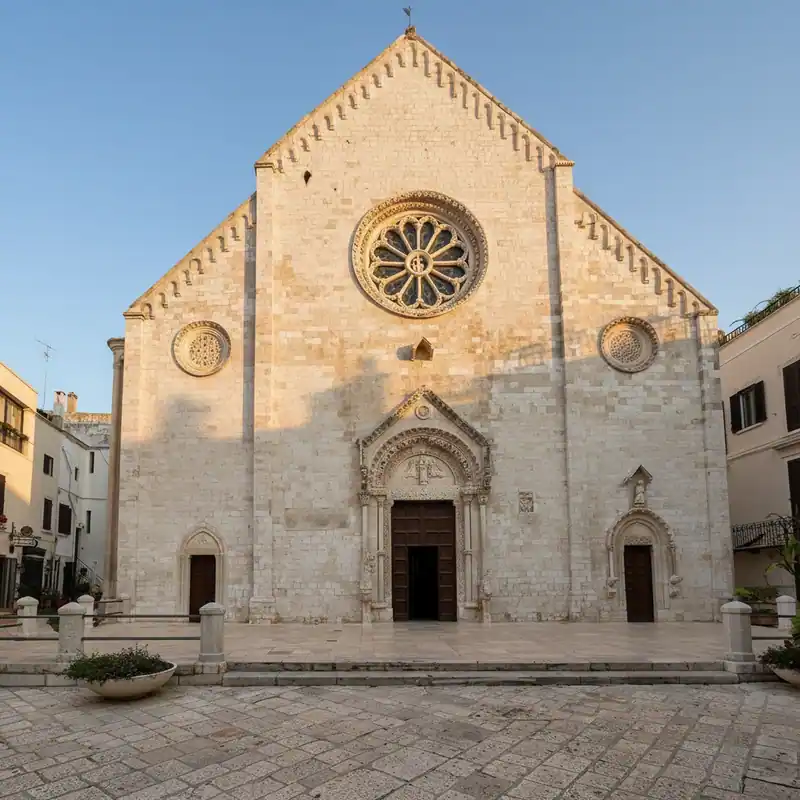
In the historic center of Conversano, the Cathedral of Saint Mary of the Assumption rises above cobbled streets and sun-bleached piazzas, its baroque façade a testament to centuries of faith and artistry. This is no museum piece; it remains a living heart of worship and community, where the echo of footsteps on marble mingles with whispered prayers and the scent of aged wood and candle wax.
A Façade That Tells Stories in Stone
The cathedral's exterior is a study in contrasts strength and grace, weight and light. Elaborate stone carvings frame the entrance, their details softened by the passage of time and the Adriatic winds that sweep across the Puglian plains. Each figure, each scroll and floral motif, was chiseled by hands that worked in an era when stone was the canvas for devotion.
Stand for a moment in the piazza before entering. The façade shifts with the light: golden at dawn, stark white at midday, rose-tinged as the sun dips toward the Murge hills to the west.
Inside: Ornate Chapels and Quiet Grandeur
Step through the doors and the noise of the town falls away. The interior unfolds in a series of chapels, each a small world of color and craftsmanship. Religious artworks paintings darkened by age, gilded altarpieces, wooden sculptures of saints line the walls, their expressions serene or sorrowful, always human.
The side chapels reward slow exploration. Look up to find frescoed ceilings, down to discover worn marble underfoot, testament to generations who have walked this same path.
- Baroque altarpieces with intricate gold leaf and devotional scenes
- Carved wooden choir stalls that creak with history
- A crypt that whispers of the cathedral's medieval origins
- Stained glass that casts pools of colored light across the nave
- Quiet corners perfect for a moment of reflection away from the crowds
A Living Monument in the Heart of Conversano
This cathedral sits at the crossroads of old Conversano the castle looms nearby, the narrow vicoli of the historic quarter fan out in every direction. Locals still gather here for Sunday mass, feast-day processions, and the rhythms of the liturgical calendar. It's this layering of sacred and everyday that makes the cathedral feel alive rather than preserved.
Visit in the early morning or late afternoon when the light is softest and tour groups are few. Combine your stop with a walk through the old town, a coffee in Piazza Castello, or a short drive to the trulli villages of the nearby Itria Valley. The cathedral is free to enter, but a small donation helps maintain its treasures for the next generation of visitors and pilgrims alike.