
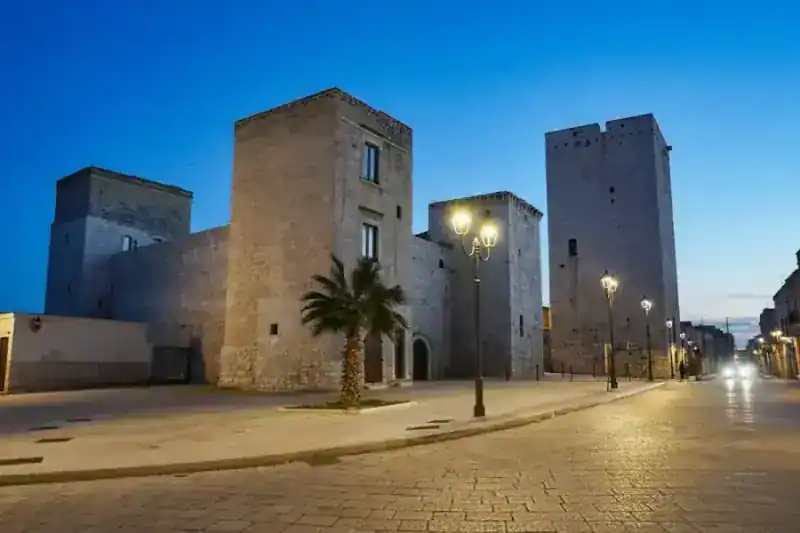
Rising from the Adriatic shoreline in Bisceglie, the Castello Svevo Angioino stands as a powerful reminder of medieval coastal defense. This fortress weaves together three architectural epochs Norman foundations, Swabian expansion, and Angevin fortification into a single stone chronicle of power, strategy, and survival. As you approach from the harbor, the castle's imposing silhouette frames the historic center, inviting you to step back through centuries of shifting allegiances and Mediterranean conflict.
Stone Stories: Three Dynasties, One Fortress
The castle's layered architecture tells a story of evolving military strategy. The Norman core dates to the 11th century, built to control the harbor and protect against Saracen raids. Later, Emperor Frederick II reinforced it with Swabian additions, including the distinctive square towers that still dominate the skyline. The final transformation came under the Angevins, who added bastions and defensive walls to counter emerging artillery threats.
Walking through the interior spaces, you'll notice how each era left its mark. Vaulted ceilings transition from Romanesque simplicity to Gothic elegance, while arrow slits and machicolations reveal the constant dance between offense and defense that defined medieval coastal life.
Views That Commanded an Empire
Climbing the castle towers rewards you with sweeping views of Bisceglie's harbor, the Adriatic horizon, and the terracotta rooftops of the old town. These vantage points weren't built for tourists they were strategic observation posts where sentries watched for approaching fleets. Today, they offer some of the finest photo opportunities on the northern Puglian coast, especially during golden hour when the limestone walls glow amber.
The panorama extends inland to the olive groves and farmland that sustained the garrison, a reminder that castles were economic centers as much as military ones. On clear days, you can trace the coastline north toward Trani and south toward Molfetta, understanding how this fortress fit into a broader network of coastal defense.
Insider Tips for Your Visit
- Arrive early in the morning or late afternoon to avoid midday heat the stone courtyards offer little shade in summer
- Combine your visit with a stroll through Bisceglie's borgo antico, where narrow streets and Romanesque churches create a living medieval atmosphere
- Don't miss the harbor-side promenade just below the castle walls, perfect for an aperitivo after exploring
- Check for occasional exhibitions and cultural events hosted in the castle spaces local museums sometimes stage temporary displays
- Wear comfortable shoes; the stone floors and staircases can be uneven and steep in places
Beyond the Castle Walls
Bisceglie's historic center deserves at least an hour of wandering. The 12th-century cathedral, the ancient dolmen on the outskirts, and the lively seafood restaurants along the harbor all add depth to your castle visit. The town sits conveniently between Trani (famous for its waterfront cathedral) and Molfetta, making it an ideal stop on a coastal itinerary that traces Puglia's Norman and Swabian heritage.
The castle experience resonates differently across seasons. Summer brings the buzz of local festivals and open-air concerts, while autumn and spring offer quieter moments to absorb the history without the crowds. Winter visits can feel especially atmospheric when sea mist wraps around the towers, echoing the castle's medieval maritime purpose.