
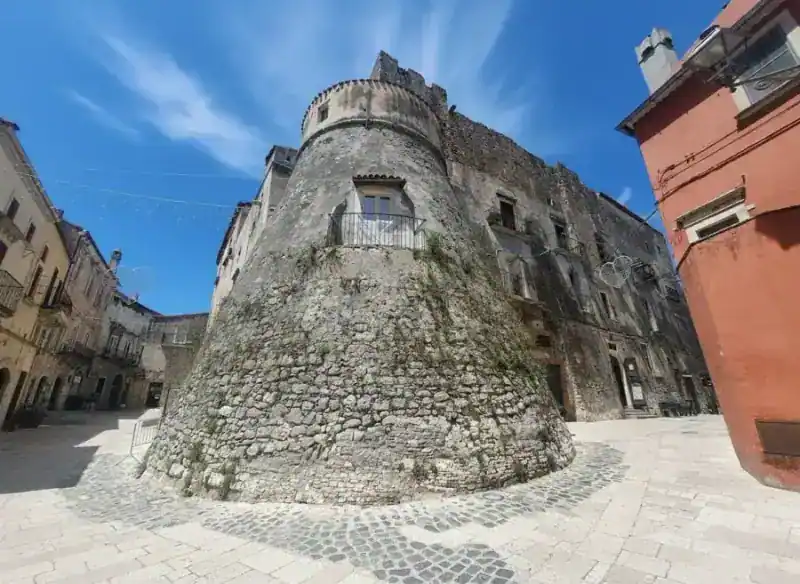
Perched in the heart of Vico del Gargano, one of the white-washed hill towns of the Gargano National Park, the Castello Normanno Svevo Aragonese rises like a sentinel over the old town's maze of narrow streets. This isn't a single-period monument it's a palimpsest in stone, where Norman foundations meet Swabian towers and Aragonese bastions, each layer whispering a different chapter of Puglia's turbulent past. Walking through its thick walls, you're tracing the footsteps of conquerors, merchants, and defenders who shaped this corner of the Adriatic.
Three Dynasties, One Fortress
The castle's name alone is a history lesson: Normanno (Norman), Svevo (Swabian, or Hohenstaufen), and Aragonese mark the successive waves of rule that fortified this strategic hilltop. The Normans laid the first stones in the 11th century, recognizing the town's commanding views over the coast and the Foresta Umbra. Later, Frederick II of Swabia reinforced it as part of his network of southern strongholds, and the Aragonese added artillery bastions when gunpowder changed the face of war.
Today, you can still trace these architectural strata. Look for the squat, rounded Norman keep, the elegant Gothic arches favored by the Swabians, and the low, thick walls designed to absorb cannonball impacts in the Aragonese era.
Walking the Ramparts
The castle opens onto a small courtyard, where weathered stone glows warm in the afternoon sun. Climb the surviving stairways to the upper levels, and you'll find yourself eye-to-eye with the rooftops of Vico's old quarter whitewashed case a corte clustered like barnacles around the fortress. On clear days, the view stretches to the shimmering Adriatic and the pine-clad slopes of the Gargano promontory.
The castle isn't a polished museum; it retains a rough, lived-in quality. Stones are cool underfoot, and the air inside carries the faint scent of moss and limestone. Bring a light jacket even in summer the thick walls hold the chill of centuries.
Fitting It Into Your Gargano Loop
Vico del Gargano is a natural pause on a circuit of the northern Gargano. After exploring the castle, wander the town's tangled alleys look for the Vicoli dell'Amore, narrow lanes barely wide enough for two people to pass, often decorated with flower pots and ceramic tiles. The town is also a gateway to the Foresta Umbra, a beech and oak woodland that feels transplanted from the Alps, just a 20-minute drive inland.
Time your visit for late afternoon, when the golden light turns the stone warm and the castle casts long shadows over the piazza below. Combine it with a sunset drive to Peschici or Vieste on the coast both are less than half an hour away and finish the day with orecchiette alle cime di rapa at a family-run trattoria in the old town.
- Layered fortifications spot the Norman keep, Swabian arches, and Aragonese gun ports in a single walk
- Rooftop panoramas over the whitewashed alleys of Vico and out to the Adriatic
- Cool stone interiors that offer respite from the Puglian sun, even in August
- Easy access to the Foresta Umbra and northern Gargano beaches within 30 minutes
- Best light for photography from 5 PM onward, when the stone glows amber