
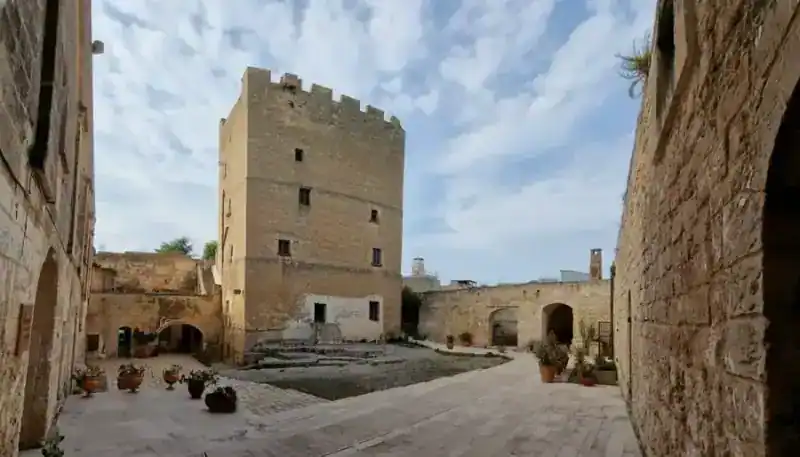
Perched at the highest point of Grottaglie's historic center, Castello Episcopio rises like a silent witness to centuries of bishops, nobles, and artisans. This fortified palace, built between the 14th and 16th centuries, blends the austere lines of medieval defense with the elegant courtyards and loggias of the Renaissance. Walking through its stone archways feels like stepping into a world where power and faith shaped every corner of daily life.
A Palace Between Two Worlds
Unlike many coastal fortresses built to repel invaders, Castello Episcopio served as the summer residence of the archbishops of Taranto. Its thick walls and corner towers were designed as much for prestige as protection. Inside, frescoed chambers and grand halls reveal the refined tastes of ecclesiastical nobility, while narrow spiral staircases hint at the castle's dual role as sanctuary and stronghold.
The architecture tells a story of transformation. Early medieval stonework gives way to Renaissance windows and decorative portals, evidence of centuries of renovations that softened the fortress into a palazzo. Today, the castle houses the Museo della Ceramica, celebrating Grottaglie's centuries-old ceramic tradition a perfect marriage of historic space and living craft.
What Awaits Inside the Walls
- Vaulted chambers adorned with period frescoes and exposed stone that echo with the footsteps of bishops past
- A Renaissance courtyard framed by elegant arches, offering views over the terracotta rooftops of the old town
- The Museo della Ceramica, showcasing pottery from ancient Greek fragments to contemporary glazed masterpieces
- Panoramic terraces from the upper levels, where you can gaze across the Gravine ravines and olive groves stretching toward the Ionian Sea
- Temporary exhibitions in restored halls that bring contemporary art into conversation with medieval stone
Exploring the Ceramic Quarter
After your visit, wander down into the Quartiere delle Ceramiche, just below the castle walls. This labyrinth of whitewashed streets is lined with workshops where potters still shape clay on ancient wheels, continuing techniques passed down through generations. You'll find everything from rustic pignate (traditional cooking pots) to vibrant, hand-painted tiles.
Grottaglie's location roughly halfway between Taranto and the Adriatic coast makes the castle an ideal stop on a day exploring the Valle d'Itria or en route to the baroque splendor of Martina Franca. Arrive in the late afternoon when the western sun paints the castle's honey-colored stone in warm gold, and the streets below come alive with the quiet hum of ceramic studios closing for the day.
When History Meets Craft
The castle isn't just a relic; it's a living cultural hub. Throughout the year, it hosts concerts, craft fairs, and cultural festivals that draw locals and travelers alike. The blend of solemn medieval architecture and the vibrant energy of Grottaglie's artisan community creates an atmosphere that feels both timeless and immediate.
Whether you're tracing the footsteps of Renaissance bishops, hunting for the perfect handmade ceramic souvenir, or simply soaking in the view from the ramparts, Castello Episcopio offers a rare glimpse into the layered history of inland Puglia where defense, devotion, and craftsmanship have always walked hand in hand.