
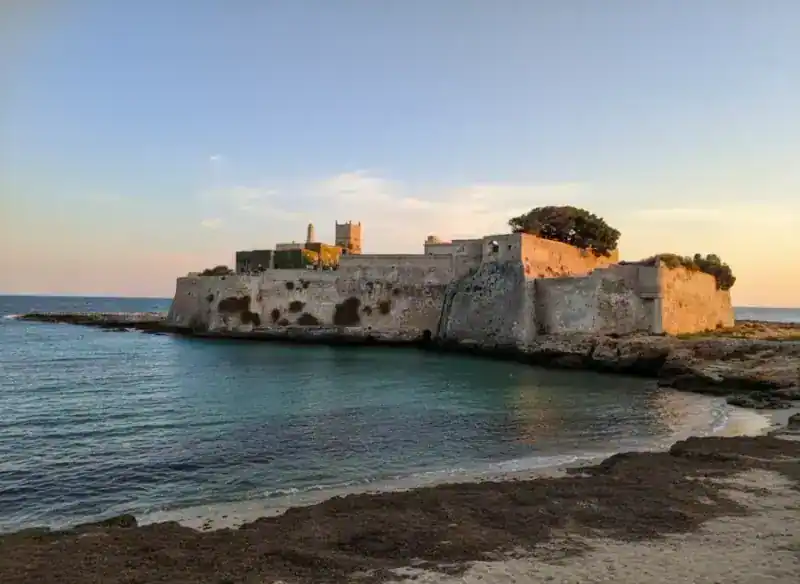
Perched in the countryside just outside Monopoli, Castello di Santo Stefano rises from the earth like a sentinel of another age. This fortified medieval castle has stood watch over the surrounding farmland for centuries, its weathered stone walls a testament to the region's layered past. Walking through its grounds, you'll feel the weight of history Normans, Aragonese, and local feudal lords all left their mark on these stones.
A fortress shaped by centuries
The castle's architecture tells a story of defense and adaptation. Thick limestone walls, once designed to withstand sieges, now frame views of olive groves and the distant Adriatic shimmer. The structure retains much of its original medieval character, with traces of later Renaissance additions visible in the arches and doorways.
As you explore the outer walls and inner courtyards, notice the subtle shifts in masonry each layer represents a different chapter in Monopoli's turbulent history. The castle served as both military stronghold and noble residence, and that dual purpose is written into every corner.
What to experience on your visit
The real magic of Castello di Santo Stefano lies in its quiet, almost meditative atmosphere. Unlike the crowded coastal fortresses, this inland castle offers space to wander and imagine. The surrounding landscape a patchwork of vineyards, ancient masserie, and dry-stone walls is quintessentially Puglian.
- Sweeping panoramic views across the Monopoli countryside, especially beautiful in late afternoon light
- Original medieval stonework and defensive features that show the castle's military past
- Peaceful rural setting far from the bustle of the coast, perfect for history lovers and photographers
- The chance to explore at your own pace, with few barriers between you and the architecture
Pairing your castle visit with the coast
Monopoli's historic port and Baroque old town are just a short drive away, making it easy to combine a morning at the castle with an afternoon exploring the waterfront. The contrast between the inland fortress and the lively lungomare gives you two sides of the same story medieval defense and maritime trade.
Consider timing your visit for late afternoon, when the golden hour bathes the stone in warm light and the summer heat begins to soften. Bring a camera, wear comfortable shoes for uneven surfaces, and allow at least an hour to explore the grounds fully. The area around the castle is also excellent for cycling, with quiet country roads connecting to nearby masserie and chapels.