
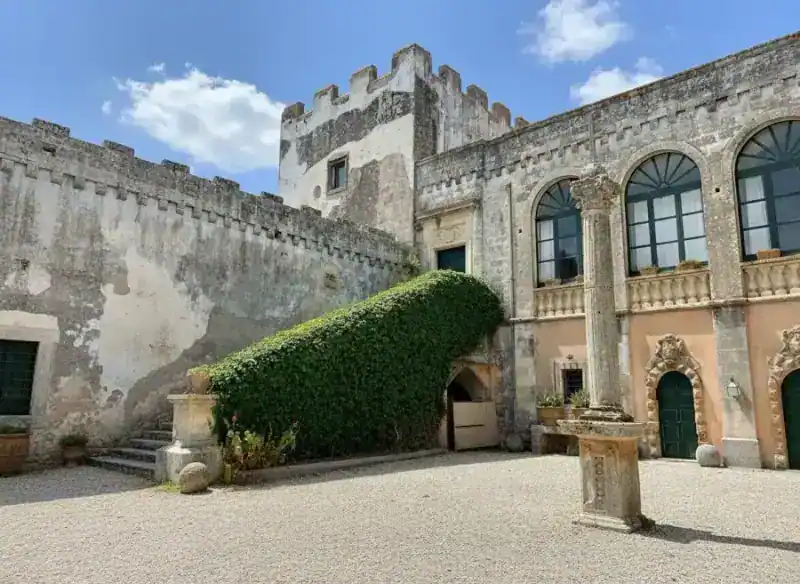
In the quiet heart of Depressa, a village in the Province of Lecce, the Castello della Famiglia Winspeare stands as a rare window into the aristocratic past of Puglia's inland territories. This fortified residence blends the defensive architecture of medieval strongholds with the refined living spaces of noble families, offering visitors a layered journey through time. Unlike the coastal towers scattered along the Adriatic and Ionian shores, this castle tells the story of land-based power, family lineage, and the evolution of domestic life behind thick stone walls.
From Fortress to Family Seat
The castle's architecture speaks to its dual purpose: protection and prestige. Original defensive structures thick masonry, narrow windows, corner bastions reveal the turbulent centuries when raids and territorial disputes shaped daily life. Over time, the Winspeare family transformed these martial bones into elegant living quarters, adding frescoed ceilings, carved doorways, and courtyards that soften the fortress severity.
Walking through the interconnected rooms, you trace the shift from medieval austerity to baroque refinement. Each space holds clues coat-of-arms plaques, family portraits, furniture fragments that sketch the daily rhythms of noble life in inland Puglia.
What You'll Discover Inside
The castle reveals itself in layers, rewarding those who take time to notice details. Period furnishings, though sparse, anchor each room in its era, while explanatory panels (mostly in Italian) provide context for the architectural evolution.
- Fortified towers offering views over Depressa's compact historic center and the surrounding olive groves
- Vaulted chambers that once served as storage, now echoing with centuries of footsteps
- Frescoed ceilings in the main halls, showcasing late Renaissance and baroque motifs
- Stone staircases connecting defensive lookouts to intimate family quarters
- Courtyard spaces where the castle's defensive exterior gives way to domestic tranquility
Beyond the Castle Walls
Depressa itself invites a slow wander. The village's compact lanes, whitewashed houses, and case a corte (courtyard homes) preserve the texture of rural Puglian life. Combine your castle visit with a walk to the nearby Church of San Vito, or venture a few kilometers to explore the baroque flourishes of Galatina and its famed Basilica of Santa Caterina d'Alessandria.
For a deeper dive into the region's noble heritage, the castles of Copertino and Acaya each within a 20-minute drive offer complementary perspectives on fortified architecture. Together, they form a triangle of defensive history across the inland plains of Lecce province.
Timing Your Visit
The castle's thick stone walls provide natural cooling in summer, making it a welcome retreat during the hottest months. Spring and autumn light, however, brings out the warm ochres and honeys of the masonry, and the surrounding countryside bursts with wildflowers or harvest activity. Visiting on a weekday often means you'll have entire rooms to yourself, allowing for quiet contemplation of the centuries embedded in these walls.
The castle appeals to anyone drawn to the quieter side of Puglian history those who seek stories beyond the beaches and coastal glamour. Photographers will find dramatic contrasts of light and shadow in the vaulted spaces, while history enthusiasts can piece together the architectural timeline etched into every room.