
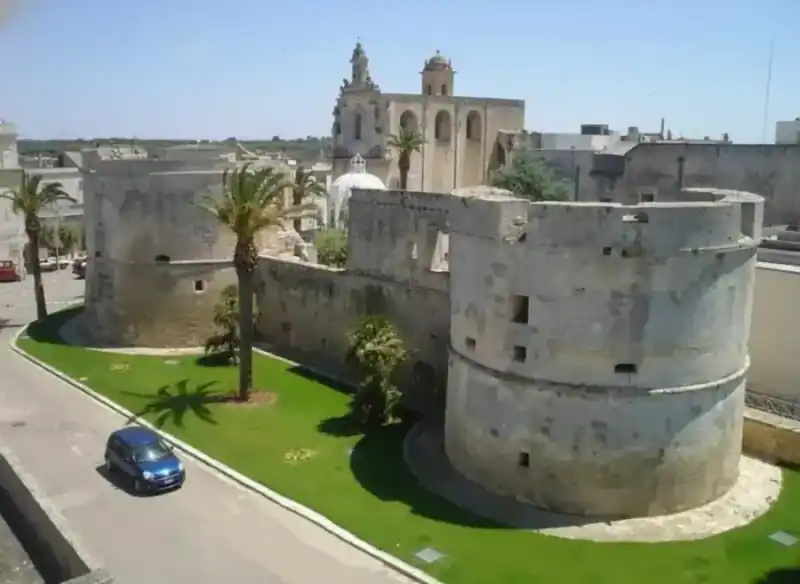
In the heart of Palmariggi, a small town in the Province of Lecce, stands a fortress that whispers tales of medieval conquest and coastal vigilance. The Castello Aragonese rises from the historic center, its ancient stone walls a testament to the strategic importance this corner of Puglia once held. This is not a castle of fairy tales, but a working military structure built to protect, to watch, and to endure.
Stone Sentinels of the Adriatic
The castle's architecture speaks the language of defense. Thick walls, narrow slit windows, and robust corner towers were designed not for beauty but for survival against sieges and coastal raids. Walking through its chambers, you feel the weight of centuries the cool air trapped in stone corridors, the strategic positioning that allowed guards to monitor approaching threats from every angle.
The Aragonese influence is unmistakable, reflecting the period when the Spanish Crown sought to fortify this stretch of the Adriatic against Ottoman incursions. Every architectural choice was deliberate, every stone placed with purpose.
What the Walls Remember
Stand in the inner courtyard and imagine the bustle of medieval garrison life. Soldiers drilled here, supplies were stored in vaulted rooms, and lookouts scanned the horizon for sails. The fortress wasn't isolated it was part of a network of coastal defenses that stretched along Puglia's vulnerable eastern shore.
Today, the silence is profound. The stones have softened with age, and wildflowers push through cracks in the masonry, reclaiming what was once purely functional.
Experience the Medieval Mindset
- Trace the perimeter walls to understand sight lines and defensive positioning
- Examine the merlons (battlements) that protected archers during assaults
- Explore the interior chambers to see how space was maximized for storage and shelter
- Notice the transition from rough medieval construction to later Renaissance refinements
- Photograph the interplay of light through arrow slits at different times of day
Beyond the Fortress Walls
Palmariggi itself rewards exploration. The town's centro storico retains its medieval layout, with narrow lanes winding between whitewashed houses adorned with flower pots. Nearby, the baroque splendor of Lecce lies just 20 kilometers west, offering a striking contrast to the castle's austere military aesthetic.
For those drawn to Puglia's defensive heritage, the coastal towers dotting the Adriatic Torre dell'Orso, Torre Sant'Andrea make perfect companions to a castle visit. Each tells part of the same story: a region perpetually watching the sea, perpetually preparing, perpetually enduring.
Timing Your Visit
Spring and autumn bring the most pleasant weather for exploring the castle's exterior and the town's streets. Summer heat intensifies the sensory experience stone baking under the Mediterranean sun, cicadas singing in olive groves just beyond the town limits. Winter visits offer solitude and a more atmospheric encounter with the fortress's formidable presence.
The castle's free access makes it an easy addition to any itinerary through the Province of Lecce, whether you're a history enthusiast tracing military architecture or simply a curious traveler drawn to places where the past feels tangible.