
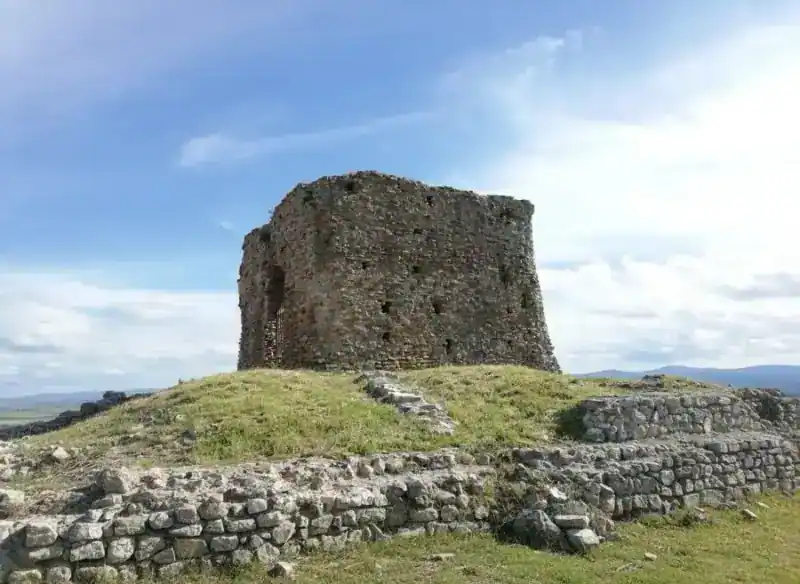
On a low rise just outside Torremaggiore, in the northern reaches of Puglia's Tavoliere plains, the ruins of Castel Fiorentino stand as silent witnesses to one of medieval Europe's most dramatic moments. This is where Emperor Frederick II died in 1250, ending an era that shaped the cultural and political landscape of southern Italy. Today, the fortress invites you to walk through centuries of history, where every stone holds a story and the horizon stretches across golden wheat fields and olive groves.
Where an Emperor Drew His Last Breath
Castel Fiorentino's fame rests on a single, powerful moment: the death of Frederick II, the Stupor Mundi the Wonder of the World. The castle served as a hunting lodge and strategic outpost in his vast empire. Standing among the weathered walls, you can almost hear the echoes of courtiers and soldiers who once filled these chambers.
The ruins are modest but evocative. Fragments of walls, archways, and foundations sketch the outline of what was once a formidable fortress. Interpretive panels help you imagine the original structure, while the silence of the countryside deepens the sense of stepping back in time.
Sweeping Views Across the Tavoliere
The fortress sits on a gentle elevation, offering uninterrupted panoramas over the rolling plains that Frederick II loved to hunt. The landscape shifts with the seasons brilliant green in spring, sun-baked gold in summer, and soft amber in autumn. On clear days, you can trace the distant outline of the Gargano promontory to the northeast.
The site is largely open-air, so bring a hat and water, especially in warmer months. Early morning or late afternoon light casts the ruins in a warm glow, perfect for photography and quiet reflection.
What to Experience at the Ruins
- Medieval architectural fragments that reveal defensive techniques and royal construction styles
- Panoramic lookout points where you can survey the same plains Frederick II once ruled
- Informational signage detailing the castle's role in Swabian history and the emperor's final days
- A peaceful, rarely crowded setting ideal for history lovers and contemplative walks
- Easy access from Torremaggiore's town center, with nearby rural roads perfect for a scenic drive
Combine with Nearby Treasures
Torremaggiore itself is worth a stroll, with its compact historic center and welcoming trattorie serving hearty Puglian fare. Just a short drive south, the medieval town of Lucera boasts a magnificent amphitheater and a towering Swabian-Angevin fortress. To the north, the Gargano National Park offers coastal cliffs, forests, and pilgrimage sites like Monte Sant'Angelo.
The castle is open year-round and best visited during spring wildflower season or the cooler months of autumn, when the plains are at their most photogenic. Pack a picnic and linger there's something timeless about sharing bread and cheese where emperors once walked.