
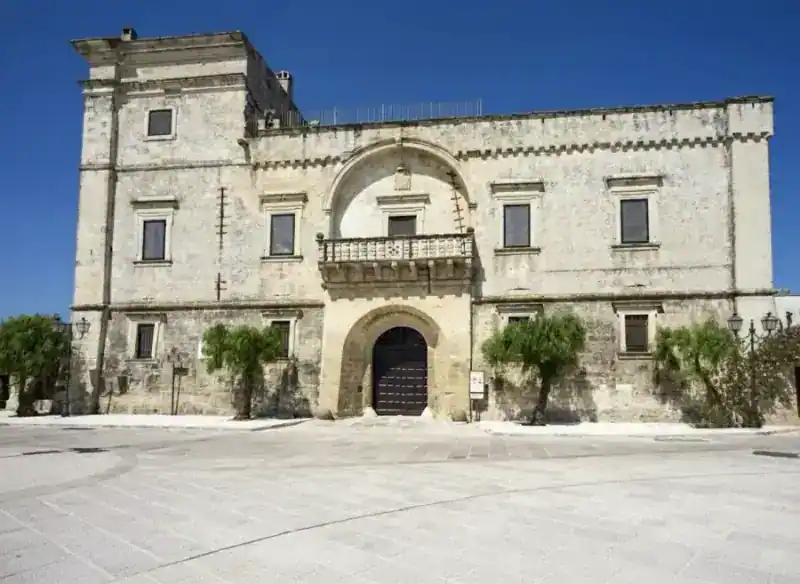
In the quiet heart of Casamassella, a small town in the Province of Lecce, a stone fortress rises from the central piazza, its weathered walls echoing centuries of watch and ward. The castle stands as a testament to the region's turbulent medieval past, when coastal raids and feudal rivalries shaped every stone laid. Today, visitors step through its ancient gates into a world where history is tangible, and the architecture itself tells the story.
The Weight of Stone and Time
The castle's defensive features dominate its character thick walls, narrow arrow slits, and corner towers that once scanned the horizon for threats. Walking through the interior, you feel the cool embrace of limestone and the hush that centuries of vigilance have left behind. The structure was built to endure, and endure it has, with minimal modern intervention preserving its raw, authentic atmosphere.
Every room and corridor reveals a layer of local history, from noble families who claimed the fortress as their seat to the townspeople who sheltered within its walls during times of danger. The stone floors, worn smooth by generations of footsteps, and the vaulted ceilings create a sensory connection to the past that few heritage sites can match.
What the Walls Remember
Casamassella Castle isn't just a monument it's a narrative. The fortress has witnessed the rise and fall of dynasties, the shift from feudal power to civic community, and the quiet transformation of a defensive stronghold into a cultural landmark. As you explore, you'll notice the blend of military pragmatism and unexpected decorative details, hints that even in an age of conflict, beauty found a place.
- Imposing corner towers that offer a bird's-eye view over the town and surrounding olive groves
- Original stone staircases worn smooth by centuries of use, spiraling up to the upper levels
- Arrow slits and defensive apertures that tell the story of constant vigilance
- Cool, shadowed courtyards where the temperature drops even on the hottest summer days
- Architectural details that reveal the evolution of building techniques over different centuries
Beyond the Fortress Gates
Casamassella itself is a gem of slow-paced Puglian life, with whitewashed houses, cobbled lanes, and locals who still gather in the piazza for the evening passeggiata. The castle sits at the town's heart, making it easy to combine your visit with a stroll through the historic center or a stop at a nearby trattoria for handmade orecchiette.
The location also puts you within easy reach of Lecce just a short drive north where Baroque splendor awaits, and the Adriatic coast to the east, where crystalline beaches and coastal towers punctuate the shoreline. The castle makes an ideal anchor for a day exploring the lesser-known corners of the Province of Lecce, where history and everyday life remain beautifully intertwined.
When to Visit and What to Bring
Spring and autumn offer the most comfortable temperatures for exploring the castle's stone interior and climbing its towers. Summer can be warm, but the thick walls provide natural cooling. Bring a camera the play of light through narrow windows and the views from the towers are unforgettable. Wear comfortable shoes; the uneven stone floors and staircases demand steady footing.
The castle welcomes everyone, from history enthusiasts and architecture lovers to families looking for a tangible connection to the past. Its quiet grandeur and unhurried atmosphere make it a perfect counterpoint to the busier coastal attractions, offering a moment to reflect and imagine the lives lived within these walls.