
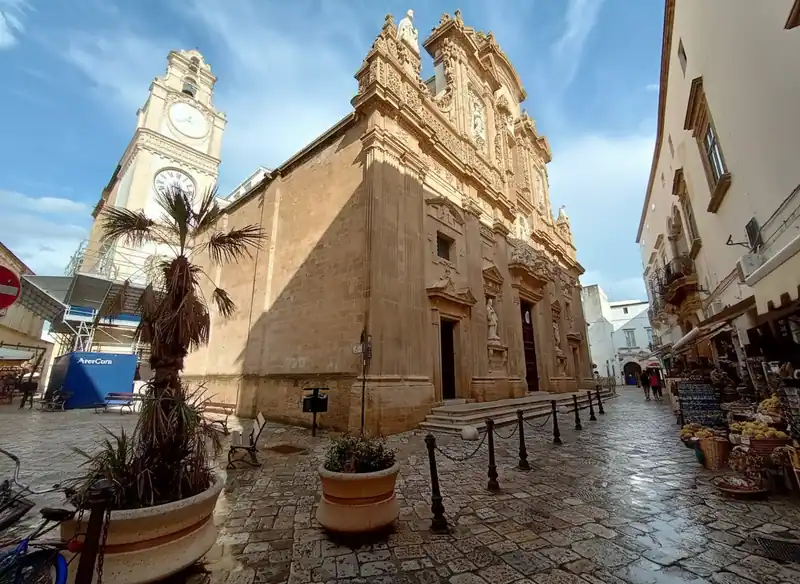
Rising above the cobblestones of Gallipoli's historic island quarter, the Basilica Cattedrale di Sant'Agata commands both skyline and spirit. This grand baroque cathedral has anchored the centro storico for centuries, its golden façade catching the Ionian light as fishing boats return to the harbor below.
A Symphony in Stone and Gold
Push open the heavy wooden doors and the outside world falls silent. Your eyes need a moment to adjust from the brilliant coastal sun to the cathedral's jewel-box interior, where every surface seems to shimmer with gilded stucco, polychrome marble, and heavenly frescoes. The nave stretches before you in a cascade of baroque exuberance twisting columns, cherub-laden cornices, and altarpieces that glow like icons.
Sant'Agata, Gallipoli's patron saint, presides over the main altar in a radiant portrayal that draws pilgrims and art lovers alike. The craftsmanship speaks to the wealth that once flowed through this maritime republic, when Gallipoli's lamp oil lit half of Europe and its merchants commissioned the finest artisans from Naples and beyond.
Treasures Hidden in Plain Sight
Many visitors linger only in the central nave, but the cathedral rewards those who wander its side chapels and transepts. Look for the intricately carved choir stalls, the Renaissance baptismal font tucked into a quiet corner, and the crypt that hints at even older layers of worship beneath your feet.
- The Chapel of the Sacrament – a riot of angels, saints, and gilded vines that seems to defy gravity
- 18th-century canvases by local masters depicting miracles and martyrdoms in dramatic chiaroscuro
- The bell tower view (when open) offering a rare vantage over the island's terracotta rooftops and the sapphire sea
- Polychrome marble floors that map the cathedral's centuries of renovation and devotion
When Silence Meets the Sea
The cathedral sits just steps from the lungomare, making it an ideal pause between beach time and an evening passeggiata. Early morning visits offer near-solitude, with soft light filtering through stained glass and the faint sound of waves against the ramparts. Late afternoon brings a golden hour glow that sets the baroque details ablaze.
After your visit, wander the labyrinthine alleys of the old town whitewashed walls, artisan workshops, and sudden glimpses of turquoise water. The nearby Greek Fountain and the underground olive-oil mills tell Gallipoli's layered story, while the fish market at the island's tip bursts with the day's catch and the banter of pescatori.
Devotion and Daily Life
This is a living church, not a museum. You might arrive during Mass, when hymns echo off vaulted ceilings and locals occupy the same pews their grandparents did. Respect the sacred atmosphere dress modestly, speak softly, and pause photography if a service is underway. The cathedral welcomes everyone, from historians tracing baroque routes to travelers simply seeking a moment of cool, quiet reflection after the sensory overload of the Ionian coast.