
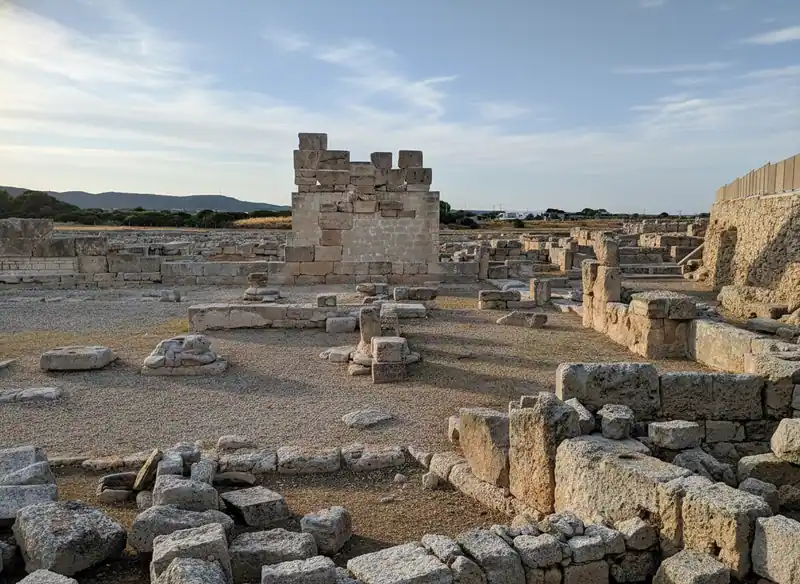
On the Adriatic coast near Fasano, the Museo Archeologico Nazionale di Egnazia unlocks the story of a thriving ancient port that once connected Messapian, Greek, and Roman worlds. The collection spans centuries of Mediterranean crossroads culture, offering a rare glimpse into the rhythms of daily life, artisan craftsmanship, and maritime trade that defined this stretch of Puglia's coast long before the region became famous for its beaches and masserie.
Layers of Civilization in Clay and Stone
The museum's galleries are arranged chronologically, guiding you from the earliest Messapian settlements through the flourishing Roman era. You'll encounter intricately decorated pottery that once held wine and oil, bronze fibulae that fastened togas, and funerary sculptures whose serene expressions still resonate across millennia. Each case tells a micro-story a child's toy, a merchant's seal, a woman's jewelry that bridges the gap between ancient Egnazia and modern Puglia.
What strikes many visitors is the intimacy of the artifacts. These aren't grandiose temple treasures but the everyday tools and ornaments of fishermen, traders, and farmers whose lives revolved around the sea and the fertile plains behind it.
Where Museum Meets Archaeological Park
The museum serves as the gateway to the adjacent archaeological park, where you can walk the limestone-paved streets of ancient Egnazia itself. After absorbing the context indoors, stepping onto the excavated forum and amphitheater grounds transforms abstract history into tangible space. The combination of curated collection and open-air ruins makes this one of Puglia's most complete archaeological experiences.
- Messapian ceramics with geometric patterns that influenced later Greek styles
- Roman glassware in jewel tones emerald, amber, cobalt still luminous after two millennia
- Votive offerings and miniature terracotta figures that hint at spiritual life and domestic rituals
- Funerary stelae carved with inscriptions in Greek and Latin, documenting trade networks across the Adriatic
- Bronze tools and coins that chart the economic rise and fall of the settlement
Timing Your Visit for Maximum Insight
Plan at least two hours to explore both museum and park; the synergy between the two is where the magic happens. Morning visits offer cooler temperatures for walking the outdoor ruins, while late afternoon light casts dramatic shadows across the ancient stonework. The museum itself is mercifully air-conditioned, making it a perfect midday retreat during Puglia's hot summers.
Fasano's historic center is just a few kilometers inland, and the famous trulli of Alberobello are a thirty-minute drive west making Egnazia an ideal stop on a loop that combines coastal and inland treasures. To the south, the baroque splendor of Ostuni gleams white on its hilltop, another compelling pairing for a day of exploration.