
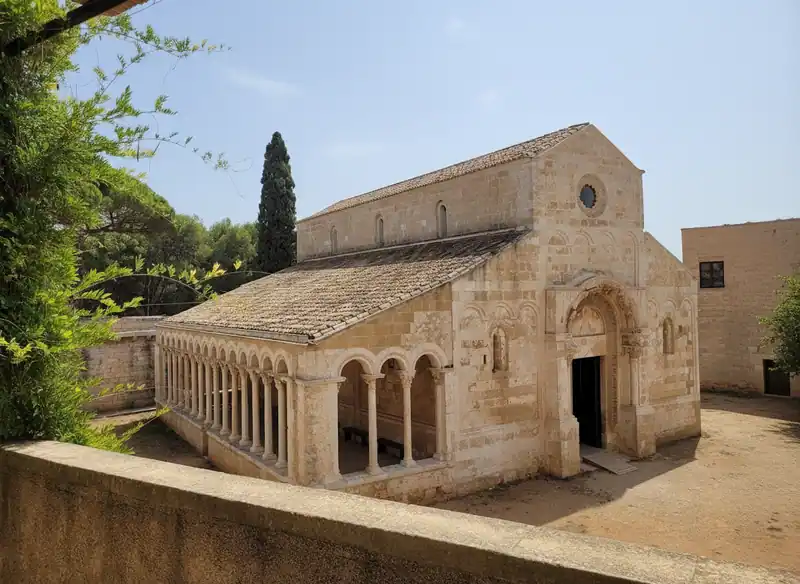
Nestled among ancient olive groves just outside Lecce, the Abbazia di Santa Maria di Cerrate rises from the Puglian countryside like a whisper from the Middle Ages. This Romanesque masterpiece, with its honeyed stone façade and exquisite decorative details, offers a rare glimpse into the devotional life of medieval monks and the architectural ambition of 12th-century builders.
Carved Stories in Stone
The abbey's façade is a gallery of medieval artistry. Intricate sculptures of animals, saints, and mythical creatures populate the columns and capitals, each one a testament to the skill of Norman-era stonemasons. The main portal, framed by ornate carvings, draws you into a world where every detail carries symbolic weight.
Inside, frescoes some faded, others surprisingly vivid depict biblical scenes and saints with the stylized grace typical of Byzantine influence. The interplay of light through narrow windows creates a shifting canvas on the ancient walls, revealing new details as the day unfolds.
- Exceptional Romanesque portal with intricate zoomorphic and floral motifs
- 13th-century frescoes blending Byzantine and Western artistic traditions
- Elegant loggia featuring columns with sculpted capitals depicting scenes from daily medieval life
- Historic olive press in the adjoining agricultural complex, showcasing traditional production methods
A Journey Through Centuries
Legend says the abbey was founded after a miraculous vision by a Norman count hunting in these lands. Whether myth or history, the abbey flourished for centuries as a center of worship and learning. Abandoned and reclaimed by nature over the years, it has been lovingly restored, allowing visitors to walk through cloisters once echoed by Gregorian chant.
The surrounding museum complex now houses ethnographic exhibits that contextualize rural life in Puglia, from agricultural tools to traditional crafts. It's a layered experience spiritual, artistic, and cultural that enriches your understanding of the region's deep roots.
The Olive Groves and Beyond
The abbey sits within a protected landscape of gnarled olive trees, some centuries old, their silver-green canopies rustling in the coastal breeze. It's an ideal setting for quiet walks, photography, or simply soaking in the timeless atmosphere. The late afternoon light here is magical, casting long shadows and bathing the stone in warm amber hues.
Combine your visit with a drive to the nearby coast the beaches of Torre dell'Orso and San Foca are just a few kilometers away. Or return to Lecce's baroque heart to contrast the abbey's austere medieval elegance with the city's exuberant 17th-century ornamentation.
- Visit in spring or autumn for the best weather and fewer crowds
- Bring a camera the play of light on stone is unforgettable
- Allow at least an hour to explore the abbey, museum, and grounds at a leisurely pace
- Wear comfortable shoes; the site includes uneven stone paths and outdoor areas